What Was I Made For? (Piano PDF) ౼ Article Plan
Today, on April 28th, 2026, enthusiasts seek readily available piano arrangements, including free PDFs, alongside MIDI files for diverse game soundtracks – from classic to modern consoles.
Billie Eilish’s haunting ballad, “What Was I Made For?”, featured prominently in the Barbie film, quickly resonated with audiences worldwide, becoming a cultural phenomenon. This emotional depth, coupled with Eilish’s signature vocal style, sparked a significant demand for piano sheet music. Aspiring pianists, both amateur and professional, are eager to learn and perform this poignant piece.
The song’s introspective lyrics and minimalist arrangement lend themselves beautifully to a solo piano interpretation. Consequently, searches for “What Was I Made For? piano PDF” have surged online. Many musicians prefer the convenience of digital sheet music, driving the need for accessible and reliable sources.
Furthermore, the availability of MIDI files alongside sheet music caters to a broader range of learning styles, allowing players to experiment with arrangements and practice alongside backing tracks; The current date, April 28th, 2026, reflects the continued strong interest in learning this captivating song on the piano.
Billie Eilish’s Musical Style & Impact
Billie Eilish has redefined contemporary pop music with her distinctive, often melancholic, sound. Characterized by breathy vocals, minimalist electronic production, and introspective lyrics, her style profoundly impacts a generation of musicians and listeners. Her music frequently explores themes of vulnerability, anxiety, and existential questioning – elements powerfully present in “What Was I Made For?”
Eilish’s approach to songwriting often prioritizes emotional impact over traditional song structures, creating a uniquely intimate connection with her audience. This stylistic choice translates well to piano arrangements, allowing for expressive interpretations that emphasize the song’s emotional core.
The demand for piano sheet music of her songs, including the current search for “What Was I Made For? piano PDF”, demonstrates her broad appeal across musical disciplines. Her influence extends beyond pop, inspiring artists in various genres to embrace vulnerability and experimentation. As of April 28th, 2026, her impact remains substantial.
Understanding the Song’s Emotional Core
“What Was I Made For?” resonates deeply due to its raw exploration of purpose and identity, themes amplified by its context within the Barbie film. The song’s emotional weight stems from a sense of questioning and vulnerability, mirroring the character’s existential crisis. This introspective quality makes it particularly compelling for pianists seeking to convey nuanced emotion through their performance.
The search for a “What Was I Made For? piano PDF” often indicates a desire to connect with this emotional core on a personal level. Playing the song allows musicians to interpret and express these feelings through the instrument.
As of April 28th, 2026, the song continues to evoke strong feelings in listeners, and the availability of sheet music – whether official or sourced from online communities offering game BGMs and similar arrangements – facilitates this emotional engagement.
Lyrical Themes: Existentialism & Purpose
Billie Eilish’s lyrics in “What Was I Made For?” grapple with profound questions of existence and the search for meaning. The song’s central theme revolves around questioning one’s purpose, a sentiment that resonates with many seeking answers in a complex world. This exploration of existentialism is a key driver behind the demand for piano arrangements.
The desire to play a “What Was I Made For? piano PDF” isn’t simply about learning notes; it’s about internalizing and expressing these lyrical themes through music. The song’s vulnerability invites pianists to connect with the lyrics on a deeper level, translating the questioning into a musical narrative.
As of April 28th, 2026, the song’s philosophical undercurrents continue to captivate audiences, and the accessibility of sheet music, alongside resources for game BGMs in MIDI format, allows for wider musical interpretation.
Musicality & Mood: How the Music Reflects the Lyrics
The hauntingly beautiful musicality of “What Was I Made For?” perfectly mirrors the lyrical exploration of existential questioning. Sparse instrumentation and a melancholic piano melody create an atmosphere of vulnerability and introspection, amplifying the song’s emotional weight. This delicate balance is a significant reason why pianists seek out a “What Was I Made For? piano PDF”.

The song’s mood is one of quiet desperation, conveyed through subtle harmonic shifts and dynamic control. A skilled piano arrangement captures these nuances, allowing the performer to translate the lyrical themes into a tangible musical experience.
Today, April 28th, 2026, the availability of both sheet music and MIDI files – often sourced alongside game BGMs – enables musicians to dissect and recreate this emotional landscape, fostering a deeper connection with the song’s core message.
Availability of “What Was I Made For?” Piano Sheet Music
Finding a “What Was I Made For?” piano PDF is currently a popular pursuit among musicians, driven by the song’s emotional resonance and Billie Eilish’s widespread appeal. Availability ranges from official, commercially licensed sheet music to user-created transcriptions circulating online. Today, April 28th, 2026, the demand fuels a diverse market.
Official sources, like Hal Leonard and Musicnotes.com, offer professionally arranged sheet music, ensuring accuracy and quality. However, numerous websites also provide free PDF versions, often sourced alongside collections of game BGMs in MIDI format.
The ease of access to these free PDFs is appealing, but quality and legality are significant concerns. Pianists seeking a reliable arrangement must carefully evaluate the source and potential inaccuracies before committing to practice. MIDI files are also readily available, offering another avenue for learning.
Official Sheet Music Sources (Hal Leonard, Musicnotes.com)
As of today, April 28th, 2026, Hal Leonard and Musicnotes.com stand as the primary official sources for “What Was I Made For?” piano sheet music. These platforms offer arrangements vetted for accuracy, providing musicians with reliable transcriptions of Billie Eilish’s poignant ballad.
Hal Leonard typically provides physical sheet music books, alongside digital downloads, often including vocal lines and guitar chords in addition to the piano part. Musicnotes.com specializes in digital sheet music, offering various arrangements – solo piano, accompaniment tracks, and even simplified versions.
Purchasing from these sources guarantees legal access and supports the songwriters and publishers. Arrangements are generally available in different skill levels, catering to beginner, intermediate, and advanced pianists. They often include professionally typeset notation and clear fingerings, alongside MIDI accompaniment options for practice.
Free PDF Sheet Music Options & Their Legality
Today, April 28th, 2026, numerous websites offer free PDF sheet music for “What Was I Made For?”. However, the legality of these sources is often questionable. Many freely available PDFs infringe on copyright laws, as they are unauthorized reproductions of copyrighted material.
Downloading and using such PDFs constitutes copyright infringement, potentially leading to legal repercussions. While some websites claim “fair use” or operate in legal gray areas, the risk remains. Websites offering extensive libraries of free sheet music, particularly those mirroring official arrangements, are highly suspect.
Legitimate free options are rare and usually limited to simplified arrangements or excerpts. It’s crucial to prioritize supporting artists and publishers by purchasing official sheet music from authorized retailers like Hal Leonard or Musicnotes.com. Remember, supporting creators ensures continued musical innovation.
Assessing the Quality of Free PDF Sheet Music
As of today, April 28th, 2026, if you opt for free “What Was I Made For?” piano PDFs, rigorous assessment is vital. Quality varies drastically. Many free versions suffer from transcription errors – incorrect notes, rhythms, or chords – hindering accurate learning and performance.

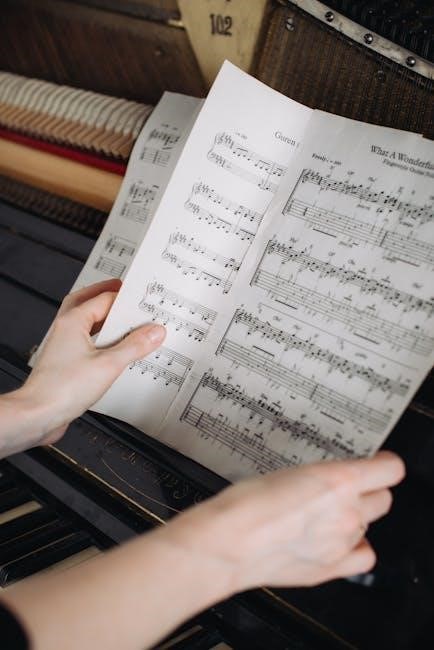
Look for clear notation, legible key signatures, and properly formatted time signatures. Scan for inconsistencies; repeated sections should align perfectly. Poorly scanned or digitally created PDFs often exhibit blurry notes or awkward page breaks. Compare the free sheet music to recordings of the song to identify discrepancies.
Consider the source’s reputation. Websites known for user-submitted content are more prone to errors. While free resources can be helpful, prioritize accuracy and reliability. Remember, a flawed transcription can reinforce incorrect habits and impede musical progress.
Accuracy & Transcription Errors

Today, April 28th, 2026, a significant concern with free “What Was I Made For?” piano PDFs is the prevalence of transcription errors. These inaccuracies stem from manual transcription, automated conversion flaws, or simply careless editing. Common errors include incorrect notes, particularly in complex chord voicings, and rhythmic misinterpretations.
Errors can also manifest as wrong key signatures, leading to a different tonal center, or incorrect time signatures, disrupting the song’s feel. Watch for missing or misplaced accidentals (sharps, flats, naturals) which drastically alter harmony. Even seemingly minor errors can compound, creating a frustrating learning experience.
Comparing the PDF to the original song is crucial. Listen carefully while following the sheet music, noting any discrepancies. Remember that many free PDFs originate from user submissions, lacking professional verification. Prioritize sources with a reputation for accuracy or consider investing in officially published sheet music.
Difficulty Level: Beginner, Intermediate, Advanced
As of today, April 28th, 2026, assessing the difficulty of “What Was I Made For?” piano arrangements depends heavily on the specific version. Simplified beginner arrangements often focus on the melody and basic chord progressions, utilizing only the right hand for the melody and simple left-hand accompaniment.
Intermediate players can tackle versions incorporating more complex chord voicings, arpeggiated patterns, and subtle dynamic variations. These arrangements demand greater hand coordination and a stronger understanding of musicality. Advanced pianists might encounter arrangements featuring intricate harmonies, extended chords, and a faithful reproduction of Billie Eilish’s nuanced style.
Many free PDFs lack clear difficulty labeling, so previewing the score is essential. Consider your current skill level honestly. Don’t hesitate to start with a simpler arrangement and gradually progress to more challenging versions as your technique improves. MIDI files can also aid in assessing complexity.
Finding MIDI Files for “What Was I Made For?”
As of today, April 28th, 2026, locating MIDI files for “What Was I Made For?” mirrors the search for free piano PDFs – it requires diligent exploration. Numerous websites specialize in providing game and movie background music in MIDI format, and often include popular contemporary songs.
These resources frequently boast extensive catalogs, ranging from classic family computer tunes to recent Nintendo Switch soundtracks. Searching specifically for “What Was I Made For? MIDI” yields varied results, with quality differing significantly between sources. Be prepared to sift through options.
Dedicated MIDI databases and online music communities are also valuable resources. Remember to exercise caution when downloading files from unfamiliar websites, prioritizing reputable sources to minimize the risk of malware. MIDI files offer a unique learning pathway for pianists.
Websites Offering Game & Movie BGMs in MIDI Format
Today, April 28th, 2026, several online platforms cater to musicians seeking MIDI files, extending beyond just game soundtracks to include movie scores and popular songs like “What Was I Made For?”. VGMusic.com stands out as a long-standing archive, boasting a vast library of video game music transcriptions in MIDI format.
BitMidi is another popular choice, offering a user-friendly interface and a diverse collection. Additionally, sites like MuseScore.com, while primarily focused on sheet music, often host user-submitted MIDI arrangements. These platforms frequently feature content from a wide range of sources, including Nintendo games.
However, it’s crucial to verify the legality and quality of downloads. Some sites may host copyrighted material without permission. Always prioritize reputable sources and be mindful of potential risks when downloading files from unfamiliar websites, mirroring the caution needed when seeking free piano PDFs.
Using MIDI Files for Learning & Practice
As of today, April 28th, 2026, MIDI files offer versatile tools for piano learners tackling pieces like “What Was I Made For?”. They allow for tempo adjustments, isolating specific instrument tracks, and looping sections for focused practice – features unavailable with static piano PDFs.
Beginners can slow down complex passages, while advanced players can analyze harmonic structures. MIDI files also facilitate experimentation with different voicings and arrangements. Software like MuseScore or GarageBand can import MIDI data, enabling visual representation and editing.
However, remember that MIDI files represent notes, not nuanced performance. They lack the expressive dynamics and subtle timing found in a skilled pianist’s interpretation. Supplementing MIDI practice with listening to the original recording and studying piano sheet music is crucial for a complete understanding.
Converting MIDI to Sheet Music (Software & Online Tools)
Today, April 28th, 2026, numerous software options and online tools facilitate converting MIDI files – readily available for game BGMs and songs like “What Was I Made For?” – into readable sheet music. Popular programs include MuseScore, Sibelius, and Finale, offering robust features for notation and editing.
Online converters, such as ConvertMusic or Online-Convert, provide quick, browser-based solutions, though often with limited customization. These tools analyze the MIDI data and generate a corresponding musical score. However, automated conversion isn’t flawless.

Expect potential inaccuracies, particularly with complex arrangements or nuanced musical phrasing. Manual review and correction are often necessary to ensure the sheet music accurately reflects the intended composition. These tools are best used as a starting point, not a definitive solution.
Popular MIDI to Sheet Music Conversion Programs
As of today, April 28th, 2026, several programs stand out for converting MIDI files – including those sourced for game soundtracks and songs like “What Was I Made For?” – into sheet music. MuseScore, a free and open-source option, is widely praised for its capabilities and active community support.
Sibelius and Finale represent professional-grade software, offering advanced notation features and precise control over the conversion process. These are industry standards, though come with a significant cost. Anvil Studio is another viable, albeit less polished, choice.
Each program interprets MIDI data differently, impacting the final sheet music’s accuracy. Experimenting with settings and manual adjustments is often crucial. Consider factors like polyphony handling and rhythmic quantization when selecting a program for optimal results.
Limitations of Automated Conversion
Today, April 28th, 2026, it’s crucial to understand that automated MIDI to sheet music conversion isn’t flawless. While programs like MuseScore, Sibelius, and Finale offer convenience, they struggle with nuanced musical interpretation. Complex arrangements, particularly those with intricate harmonies or expressive dynamics – like in “What Was I Made For?” – often yield inaccurate transcriptions.
MIDI files primarily contain note data, lacking information about articulation, phrasing, or subtle timing variations. The software must guess these elements, leading to potential errors. Polyphonic textures, where multiple notes sound simultaneously, can be misinterpreted, resulting in incorrect chord voicings.
Manual correction is almost always necessary. Expect to spend time refining the generated sheet music, correcting errors, and adding expressive markings to truly capture the song’s emotional depth. Relying solely on automated conversion is rarely sufficient.
Piano Arrangement Considerations for the Song
As of today, April 28th, 2026, arranging “What Was I Made For?” for piano demands sensitivity to its delicate emotional core. The song’s harmonic language, while not overly complex, benefits from thoughtful voicing. Avoid overly dense chords; prioritize clarity and space to allow the melody to breathe.
Consider utilizing the sustain pedal judiciously to create a wash of sound, mirroring the song’s atmospheric quality. The left-hand part shouldn’t overpower the right; a simple, arpeggiated accompaniment often works best. Explore different inversions to create smooth voice leading and harmonic interest.
Pay attention to the dynamic range. The song builds gradually, so careful attention to crescendos and diminuendos is vital. Capturing the song’s vulnerability requires a nuanced touch and expressive phrasing.
Chord Voicings & Harmonic Complexity
Today, April 28th, 2026, analyzing “What Was I Made For?” reveals a harmonic structure that, while accessible, rewards careful voicing. The song frequently employs extended chords – add9s, sus chords – creating a sense of longing and uncertainty. Prioritize voicings that emphasize these subtle harmonic colors.
Avoid root position chords where possible; inversions add smoothness and sophistication. The use of passing chords and secondary dominants, though not abundant, contributes to the song’s emotional depth. Experiment with different voicings to find those that best convey the song’s melancholic mood.
The harmonic rhythm is relatively slow, allowing for expressive rubato and dynamic shaping. Understanding the underlying chord progressions is crucial for creating a compelling piano arrangement, especially when working from MIDI or PDF transcriptions.
Dynamics & Expression: Capturing the Song’s Emotion
As of today, April 28th, 2026, successfully conveying the emotional weight of “What Was I Made For?” on piano hinges on masterful dynamic control and expressive phrasing. The song’s power lies in its subtlety; avoid overly dramatic interpretations.
Focus on a wide dynamic range, from delicate pianissimo passages to restrained mezzo forte climaxes. Utilize crescendos and diminuendos to mirror the lyrical content’s emotional arc. Pay close attention to the song’s rubato – a flexible tempo that allows for expressive stretching and compression of time.
Pedaling is crucial for creating a wash of sound that enhances the song’s melancholic atmosphere. When using PDF sheet music or MIDI transcriptions, don’t simply play the notes; interpret them with feeling, mirroring Billie Eilish’s vocal delivery.
Resources for Piano Learners: Websites & Tutorials
Today, April 28th, 2026, aspiring pianists seeking to learn “What Was I Made For?” have access to a wealth of online resources. Numerous websites offer comprehensive piano lessons, catering to all skill levels, from beginner to advanced.
Flowkey and Skoove provide interactive learning experiences, often featuring song-specific tutorials. Hoffman Academy offers a structured curriculum with free video lessons. For those seeking free content, YouTube is invaluable.
Search for “What Was I Made For piano tutorial” to find numerous user-created videos demonstrating the song. Many tutorials offer slowed-down sections and helpful visual aids. Remember to supplement these resources with readily available piano sheet music PDFs, and explore MIDI files for practice.

Online Piano Lessons & Courses
As of today, April 28th, 2026, a surge in demand for learning “What Was I Made For?” on piano has fueled the growth of online lesson platforms. These courses offer structured learning paths, often including personalized feedback and progress tracking.

Pianote provides comprehensive courses covering technique, music theory, and song tutorials. Playground Sessions utilizes interactive technology and popular songs to engage learners. ArtistWorks features lessons from renowned piano instructors.
Many platforms offer free trials, allowing potential students to sample the course content. When selecting a course, consider your skill level, learning style, and budget. Supplement these lessons with freely available piano sheet music PDFs and MIDI files to enhance your practice and understanding of the song’s nuances.
YouTube Tutorials for “What Was I Made For?”
As of today, April 28th, 2026, YouTube has become a vibrant hub for piano learners tackling Billie Eilish’s “What Was I Made For?”. Numerous channels offer tutorials catering to various skill levels, from beginner-friendly arrangements to advanced interpretations.
Channels like Lypur and HDpiano provide detailed, step-by-step guides, often incorporating on-screen notation and slow-motion demonstrations. Many tutorials utilize freely available piano sheet music PDFs as visual aids, guiding viewers through chord progressions and melodies.
Search terms like “What Was I Made For piano tutorial,” “Billie Eilish piano lesson,” and “easy piano tutorial” yield a wealth of results. Remember to assess the tutorial’s accuracy and clarity before relying on it. Combining these visual resources with MIDI files can accelerate your learning process.